In industrial environments where safety, energy efficiency, and absolute control are non-negotiable, the type of magnetic system you choose can have major implications. From lifting steel plates to magnetic clamping during machining, understanding the technical difference between an electromagnet and an electro-permanent magnet (EPM) is essential for making the right engineering or procurement decision.
What is an electromagnet?
An electromagnet is a type of magnet that becomes magnetic only when electric current flows through it. It typically consists of a coil of insulated wire wrapped around a soft iron core. When electricity flows through the coil, it generates a magnetic field in the core.
The strength of this magnetic field depends on the current’s intensity, the number of turns in the coil, and the properties of the core material. The moment the power supply is interrupted, the magnetic field disappears instantly. This makes electromagnets ideal for applications requiring controllable, temporary magnetism.
- Requires constant power to remain magnetic (“energise-to-hold”)
- Magnetic strength is adjustable via current control
- Common in solenoids, motors, magnetic locks, and cranes
What is an electro-permanent magnet (EPM)?
An electro-permanent magnet is a hybrid magnetic system that combines the steady magnetic field of a permanent magnet with the controllability of an electromagnet. It contains permanent magnetic material (such as Neodymium) and a switchable core (AlNiCo) surrounded by a coil.
A brief electric pulse sent through the coil alters the magnetic orientation of the core, either aligning it with or against the permanent magnet. This toggles the system between its magnetised and demagnetised states. Once switched, the magnet maintains its state without needing continuous power, making it highly energy-efficient and inherently safe during power failures.
- A short pulse activates the magnetic switch (0,2 – 2 sec)
- No power is needed to maintain the magnetic state
- The magnetic field remains active during power loss, offering fail-safe holding
Applications:
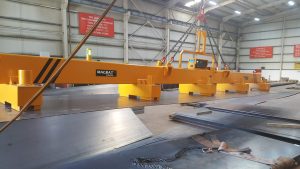
- Electro-Permanent Lifting Magnets: Safe lifting of steel plates and profiles.
- Battery-Powered Lifting Magnets: Mobile lifting with built-in battery power.
- Magnetic Quick-Change Systems: Fast, secure mould and die changes.
- Magnetic Chucks for Workholding: Precision clamping in machining operations.
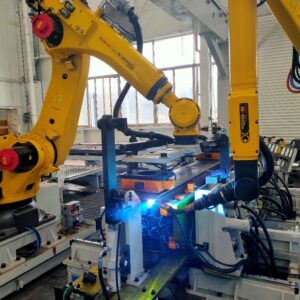
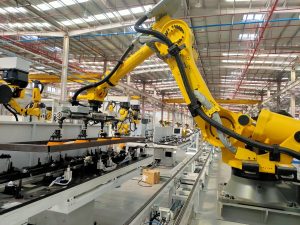
- Magnets for Automation: Reliable gripping in robotic and automated systems.
Want to learn more about the technology and its applications? Contact our team, we’re happy to advise you on the best solution for your industrial needs.
Technical comparison: Electromagnet vs Electro-Permanent Magnet
Характеристика | Electromagnet | Electro-Permanent Magnet |
Power requirement | Constant | Only during switching |
Energy consumption | High | Ultra low (up to 95% savings) |
Holding force during power outage | No | Yes – 100% safe |
Adjustable magnetic force | Yes (via current) | No (preset switching levels) |
Heating risk | High | No heating during holding |
Residual magnetism | Likely | None |
Safety factor | Low in case of outage | Standard 3:1 |
Maintenance | Requires cooling & backup systems | Maintenance-free |
This comparison makes it clear: while electromagnets offer flexibility through real-time adjustability, they come with significant drawbacks in terms of safety and energy use.
Electro-permanent magnets, on the other hand, provide stable, efficient and reliable performance, especially in critical industrial applications. Their fail-safe nature and minimal maintenance requirements make them the logical choice for environments where safety and uptime are paramount.
In-depth comparison of specific functional differences
1. Magnetic source
- Electromagnet: uses a coil and soft iron core. Magnetism is generated exclusively through electric current. When the current stops, so does the magnetism.
- Electro-permanent magnet: combines permanent magnets with a switchable core. The magnetic field persists without continuous power thanks to the intrinsic properties of the permanent magnet. Power is used only to change the magnetic state.
2. Energy consumption and safety
- Electromagnet: requires constant power input to remain magnetic. This leads to high energy costs and presents a risk: if power fails, the magnetic field vanishes instantly, potentially dropping loads mid-air.
- Electro-permanent magnet: requires only a brief electrical pulse to magnetise or demagnetise. Once magnetised, no further energy is needed to hold the load. This drastically reduces energy consumption (up to 95%) and ensures full holding force even during power outages.
3. Heat generation
- Electromagnet: because current constantly flows through the coil, heat builds up. In high-duty applications, this can lead to overheating, performance degradation, or even failure.
- Electro-permanent magnet: since energy is only consumed briefly during switching, the system remains cool during operation. This eliminates the need for external cooling systems and extends component life.
4. Force control
- Electromagnet: the holding force can be varied by increasing or decreasing the current. This is useful in some applications requiring dynamic grip adjustments.
- Electro-permanent magnet: does not allow real-time adjustment. However, systems like those from Magbat feature multi-position pick-up cycles (15%, 25%, 35%, 55%) to ensure safe and precise single-sheet lifting.
5. Fail-safety
- Electromagnet: fails open. If the power fails, the magnet stops holding. This can be catastrophic in lifting operations.
- Electro-permanent magnet: fails closed. The load remains safely clamped or held even when the power is cut, making it ideal for unattended, mobile, or safety-critical operations.
6. Maintenance and system complexity
- Electromagnet: requires reliable power supply, cooling systems, and often backup batteries. System complexity is high, and maintenance costs can accumulate over time.
- Electro-permanent magnet: no cooling, no batteries, no constant current, meaning far fewer points of failure. Long-term operation is stable and nearly maintenance-free.
7. Application fit
- Electromagnet: best suited for applications where force must be dynamically controlled, and where power infrastructure is guaranteed.
- Electro-permanent magnet: perfect for lifting, clamping, automation, mould changing, and robotic systems especially where reliability, safety, and energy efficiency are critical.
Ready to switch to electro-permanent?
Whether you’re active in metal fabrication, industrial automation or injection moulding, the right magnetic solution can significantly increase your safety, efficiency, and uptime.
Electro-permanent magnets are not just a technical upgrade, they are a strategic investment in safer operations and lower energy costs. Their fail-safe performance during power loss, minimal maintenance, and long-term durability make them ideal for the most demanding industrial applications.
Want to find out which solution fits your application best? Explore our full range of electro-permanent magnet systems or speak with our engineers for expert advice tailored to your operation